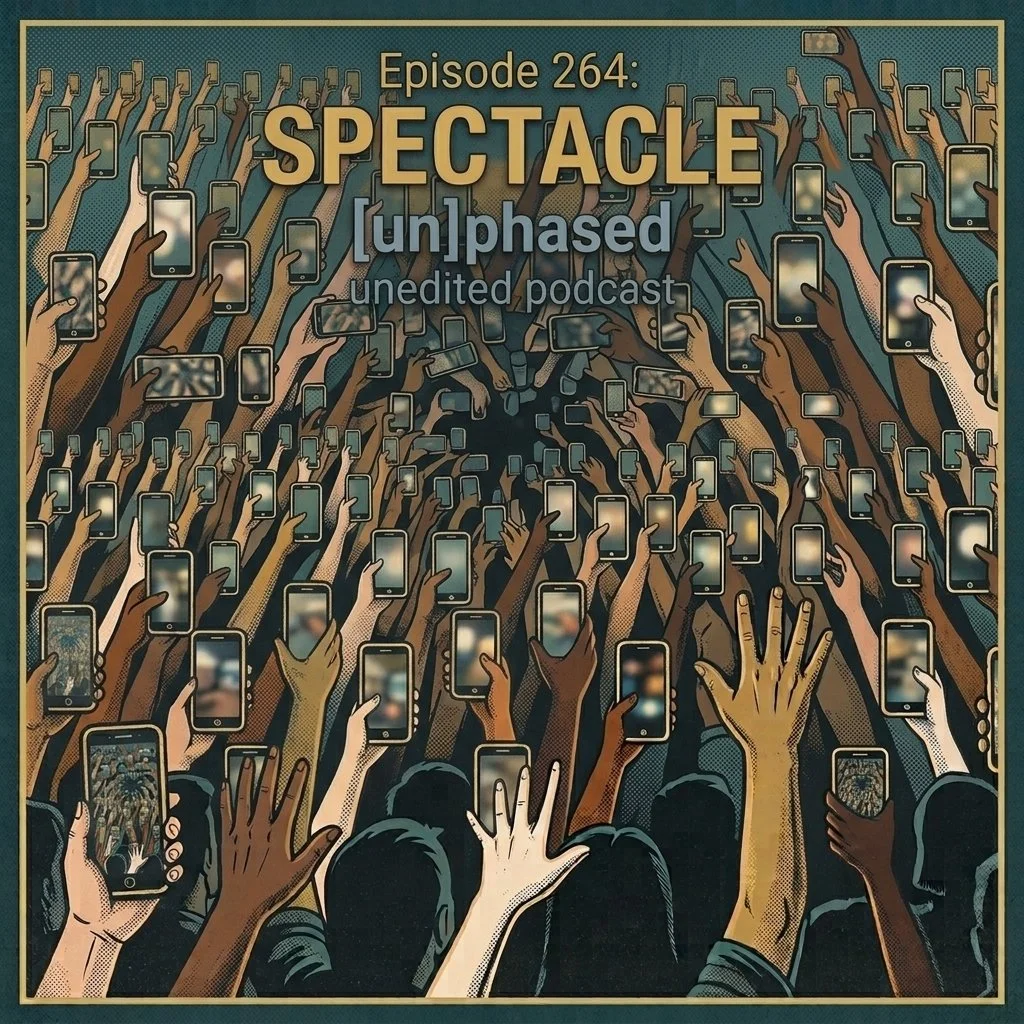
Spectacle
In this episode of [un]phased unedited, we examine "Diaspora Wars," the tensions that surface between African Americans, continental Africans, Caribbean immigrants, and other communities across the global Black diaspora.
We then move to the controversy surrounding a University of Maryland club tennis team email that included an altered version of the Maryland flag featuring r@cist imagery. We unpack the history of the image, the original artist's reaction to its recent use despite the passing of a decade, and the broader questions it raises about racism, symbolism, accountability, and the responsibilities that come with creating and circulating provocative imagery.
Finally, we turn to reports of a woman being assaulted at an October rally in Youngstown, Ohio while carrying a sign calling for the release of the Epstein files. As AI-generated images and misinformation spread online, we examine verified reporting, public reactions, and a difficult question: What happens when crowds become spectators to violence? We reflect on the moral obligations of bystanders when harm unfolds in plain sight.
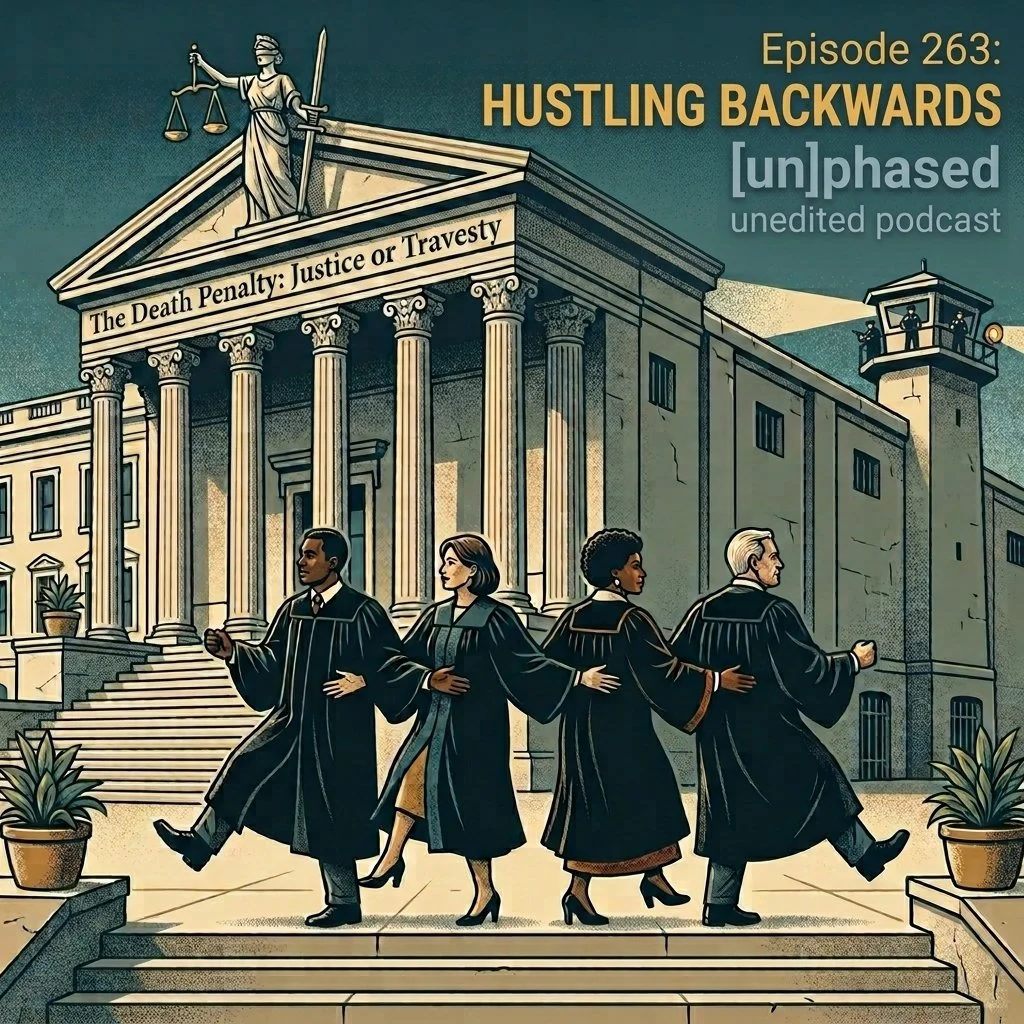
Hustling Backwards
Every so often, we stumble upon a word that aligns seamlessly with current events. Today's vocabulary spotlight features doughty and slew as we recount the case of Christa Gail Pike following her recently botched ex*cution. Dr. Lisa and Dr. Shaunna will wrestle with broader questions regarding capital punishment in the U.S., including, what comes next in Pike's legal process, the emotional complexities experienced by co-victims, and religious/ethical debates regarding the de@th penalty.
Next, we encourage everyone to bookmark the SCOTUS docket. More than 60 cases are on the shadow docket that will shape national policy on climate change, immigration, voting rights, f*rearms regulations, religious liberty, and parental rights. The October 2026 term is yet another of the Court's most consequential terms in recent years.
What do you think about the future of the d3ath penalty, and which Supreme Court case are you watching most closely this term? Share your thoughts and join the conversation.
Zero
What happens when a society believes that one group's gain must come at another group's expense?
In this episode of [un]phased unedited, Dr. Shaunna and Dr. Lisa explore the concept of the zero-sum game and the powerful ways it shapes American culture, policy, and public perception. From Heather McGhee's groundbreaking book, The Sum of Us to a recent advertising controversy involving Converse, they explore how challenged we are to manage "healthy heat" through important conversations.
Listen, subscribe, and share your thoughts with us as we continue exploring the structures, stories, and assumptions that shape our world.
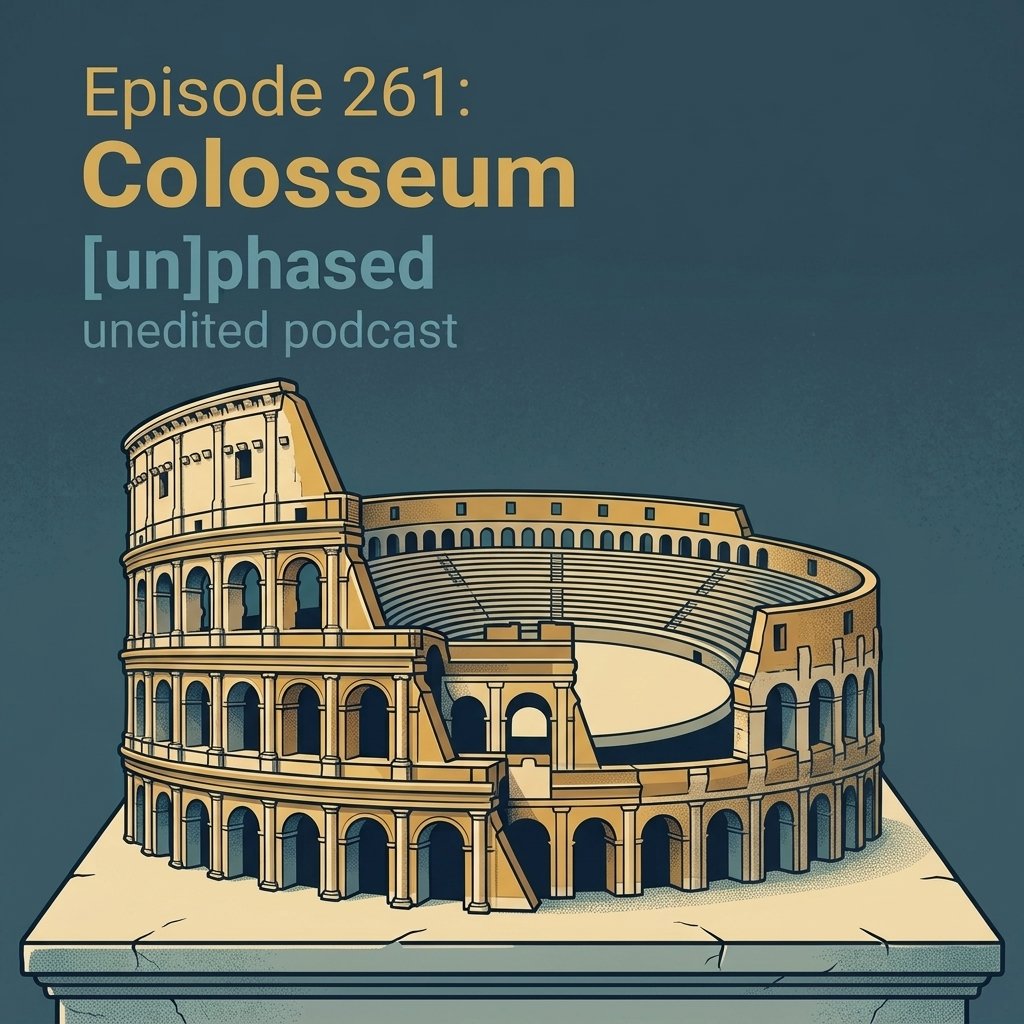
Colosseum
In this episode, Dr. Shaunna and Dr. Lisa explore Weltschmerz — the German concept of “world-pain,” a deep, melancholic weariness about the suffering and imperfection woven into human life.
Dr. Shaunna leads a conversation about gathering and fighting, drawing inspiration from Priya Parker’s books. They explore Parker’s idea of “healthy heat” and if it's even possible in the sociopolitical climate of the United States.
Then, Dr. Lisa takes the second half, guiding a reflection on memory and loss. As time stretches between us and pivotal moments — 9/11, the civil rights movement, the Obama presidency — they query the consequences of losing touch with the past.

Free Speech in Crisis (reair)
Over 400 celebrities signed an ACLU letter in support of Jimmy Kimmel's return to the air after being silenced by cronies of the current presidential administration. While public opposition to threats to free speech grew, we simultaneously had to navigate being presented with unwanted videos of recent public violence in the social media public square.

The Streisand Effect (reaired)
In this episode, we explore how attempting to quell some voices simply amplifies them. We start from Amanda Montell's book, Cultish (2021) and the world of thought‑terminating clichés. These are catchy, seemingly harmless phrases that shut down curiosity, silence, dissent, and discourage deeper critical thinking. We also investigate the role of satire as a tool for social critique, using comedian Druski’s recent work to test the boundaries of racial commentary. Then we turn to modern political language: dog whistles that have evolved from Nixon‑era “law and order” messaging into today’s outright bullhorns. Using the PBS documentary White with Fear and the recent UN vote on slavery as a crime against humanity, we explore what the U.S. "no" vote reveals about American identity and collective memory. As The New York Times piece put it nicely, “It’s Not Trump. It’s America.”

Resistance
In this episode, Dr. Shaunna and Dr. Lisa debrief Tad Stoermer’s latest work on democratic resilience and the nine strategies that separate performative resistance from sustained, principled action. They trace how movements lose momentum when power is squandered — from Biden’s missed opportunities to the enduring arc toward justice.
Abusive authority will wait you out unless you build structures that can outlast it.

Bye, Bye Golf
Apparently, there is language to describe individuals who have had to outthink systems that weren't built for their survival. (Oh wait, are we talking about the entire U.S.?)
Anyway, Bruce Ellis's Hidden Talents Framework introduces survivor's intelligence and its five dimensions.
Then, we look at Callaway Golf and Good Good's most recent advertising misstep, tracing the timeline from the deleted ad to the $1 million commitment to anti-violence organizations in response.
Listen in and think about how we can collectively reduce the need for survivor's intelligence while also patronizing businesses that value women.

The Gig is Up
In this episode of [un]phased unedited, Dr. Shaunna and Dr. Lisa tackle two of today's most pressing workforce conversations: the changing nature of employment and the growing instability within higher education. From corporate DEI decisions to the realities of adjunct faculty labor, this episode explores what happens when institutions prioritize flexibility, cost-cutting, and short-term solutions over sustainable investments in people.

Pendulum
From "peak w*ke" to a new era of class-conscious activism, Dr. Lisa and Dr. Shaunna trace how "w*ke" evolved -- from 1923 down through the most recent focus on economic populism and practical justice. Drawing on voices like AOC and Chi Ossé, we explore what happens when movements mature -- and what "w*ke" means for leadership and community work.

Incongruence
In this episode, Dr. Shaunna and Dr. Lisa explore how language and lifestyle branding shape women's identities and power.

Hold Your Nose
In this episode, Dr. Lisa and Dr. Shaunna tackle intertwined themes shaping intimacy and connection today: stealthing and the cost-of-living crisis that's rewriting the rules of dating. The topics reveal how power, consent, and economics intersect in our most personal spaces.

Russian Dolls
In today’s episode, the Drs. unpack the layered concept of respectability politics—a survival strategy turned social constraint—and explore how it continues to shape institutional norms today. Using Tuskegee University’s updated dress code policy as a case study, they examine the intersection of professional preparation, cultural expression, and standards in historically Black spaces.
Additionally, they discuss a grab bag of current events, including 45/47's mandate to mark Smithsonian exhibits with which he disagrees as "inaccuracies", his remarks about Kaitlin Collins at the White House Correspondents' Dinner, the Department of War's testosterone proposal, and Todd Blanche's Senate hearing "slip up".

Raised Eyebrows
Given that we love language, Dr. Shaunna discusses "false cognates" —words that look or sound the same across languages but mean different things—and how they can cause awkward, harmful, or even offensive moments. Toronto Tempo Head Coach Sandy Brondello provides a recent example of this with problematic language about Atlanta Dream's Angel Reese. Later Dr. Lisa discusses new cultural lows in how character and integrity seem to matter less when assessing leaders. Are we at a new low? Or is our culture simply more transparent about chronic lows in character?
Content note: This episode discusses offensive language and alleged public controversies. If you’re sensitive to those topics, listener discretion is advised.

Pitching the Smithsonian
Pick up what we're putting down with the double entendre! This week's 250th episode has little to do with the history of the country and everything to do with museums and football (soccer). We start with introducing a century-old term: "museum fatigue" which explains what we've all felt physically but never knew how to describe while appreciating art. Then, we move into The Men’s World Cup action and its inextricable connection to global relationships and politics. Finally, we discuss the White House's recent attack on the Smithsonian...and the Organization of American Historians who's not having any of it.

Generations and Accountability
In this week's episode, the Drs explore the idea of "sampling" original ideas but using them to make a point out of context. This can be used as a weapon or an effective political tool, and the ethics of intent continue to be queried.
Next up, they discuss social media use as an accountability tool. This includes public callouts — cheaters, rac*sts, other -ists — white men’s provocation of Black men and white women’s policing of others.
Finally, Dr. Lisa highlights a new-to-us Apple TV show, Widow’s Bay -- including the real-life push‑pull between old and new politics. Are wins and losses overblown? Must change be binary? Are wars between the old and new legitimate?
Listen in and let us know what you think about sampling, social media accountability, or themes from Widow's Bay.

Sally & Asylum
This week, we discuss Suzan-Lori Park's play-within-a-play, “Sally & Tom” before we segue into the latest regarding SCOTUS decisions on immigration, asylum, and green card protections.
We start with the Word of the Week, micro-boycotting, which is a great way to have agency when it feels that there are no options for you as a consumer. Then we move into the stage play that queries the complex relationship between the enslaved woman, Sally Hemings and Thomas Jefferson. We conclude with the Presidential authority to terminate Temporary Protected Status (TPS) for Haitian and Syrian nationals without a formal process, asylum and inspection obligations at the border outside the U.S., and implications for green card holders, due process, and re-entry protections.

Reflections
In today’s episode, Shaunna and Lisa reflect on the weight of June anniversaries — Pulse Nightclub (6/12) and the Emanuel 9 (6/17) — as well as the meaning of Juneteenth (6/19) in a moment that also saw the opening of the Obama Presidential Center (OPC).
Then, the green algae of the Reflecting Pool in Washington, DC is more than just a chemistry project gone wrong. They discuss the politics behind the no-bid contract which has become an expensive analogy for this entire Presidential Administration.
Lastly, the Drs. reveled in laughter about Michelle Obama and President George W. Bush's Altoids exchange at the opening of the OPC, then wondered if we can ever find collegiality, kindness, and mutual respect like this in America again.

Wildfire
The Drs. open this week's episode hot and unapologetic: a gender-reveal smoke bomb turned into a months-long inferno, a firefighter lost his life, and three companies suddenly write checks for more than $4 million. Then they pivot to the political tightrope -- authenticity vs. electability -- and ask whether moderates who vote with the sketchy are doing the right thing in the moment.
Listen in for new language like "abromantic", the deeper implication of gender reveals around the globe, and the ethics of voting for a flawed candidate.

Adaptive Intelligence
In this episode, Dr. Shaunna and Dr. Lisa examine language in a new way. First, they look at Elsa Mehary's provocative Instagram reel regarding what it means to be a polymath—someone with a wide range of knowledge or learning—and ask a provocative question: Are you a polymath, or just Black? It's always a good time to examine what’s celebrated as “genius” in one space that may be dismissed as “survival” in another.
Later, Shaunna and Lisa pivot to immigration policy, reflecting on Jonathan Blitzer’s Everyone Who Is Gone Is Here and his recent New Yorker piece on how executive actions are reshaping who gets to become -- AND STAY -- American. They connect the dots between adaptive intelligence and survival systems—whether in identity, migration, or belonging.